The Making of Genevieve F. Ray's Interview (January 14, 2023): A Remastered Tribute
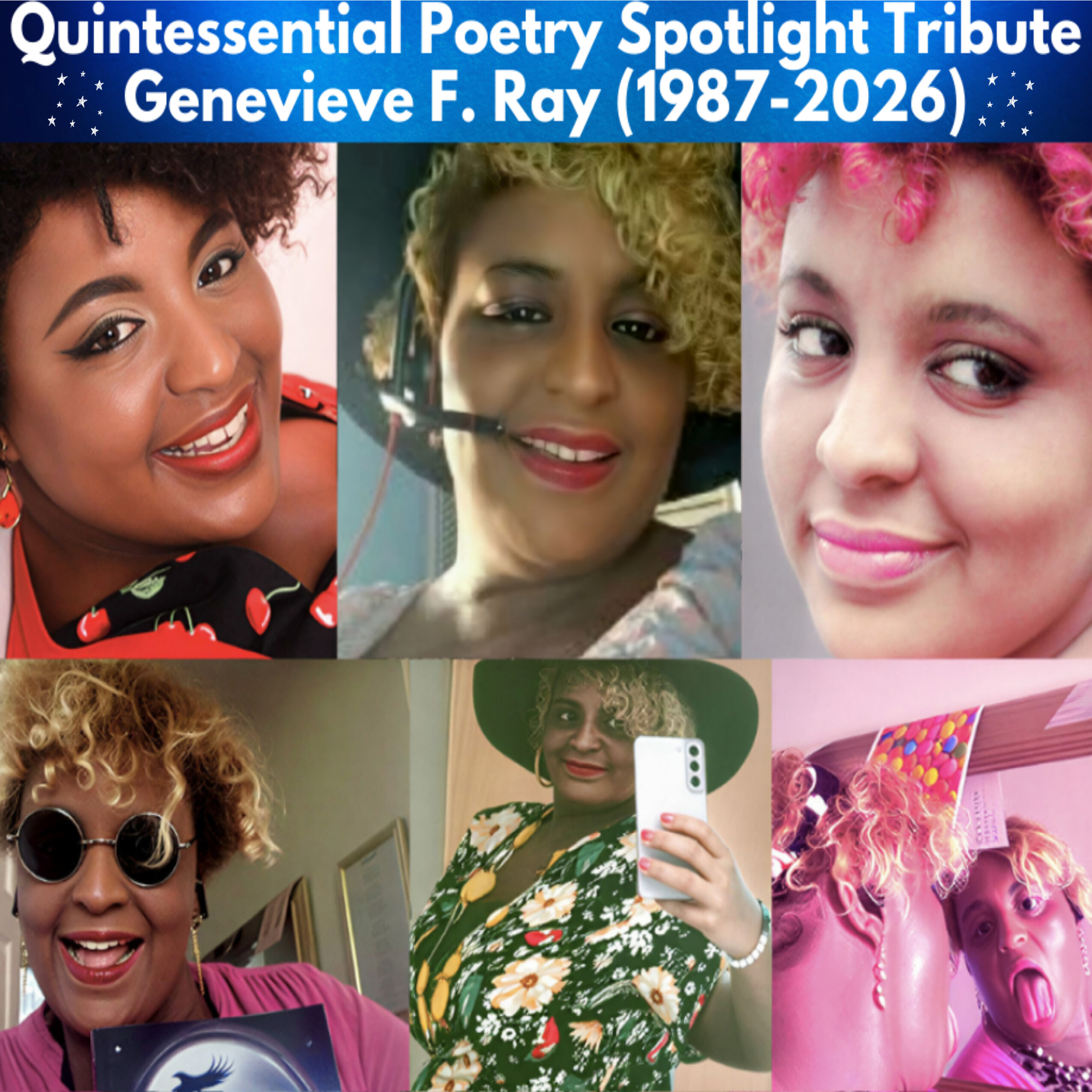
✨ A Voice Rooted in Truth ✨+
When I sat down with Genevieve F. Ray for our original conversation, I knew she was a poet. What I didn’t know—what I couldn’t have known—was how deeply her voice would stay with me long after the recording stopped. Listening back now, as I prepare to release the remastered audio, I hear things I didn’t hear then: the steadiness in her breath, the clarity in her convictions, the humor tucked between her lines, the fire she carried so naturally, the softness she never apologized for.
This wasn’t just an interview. It was a portrait. A keepsake. A moment of artistic truth.
And it began with a simple question: “How did you become the poet you are?”
Her answer was not rehearsed. It was not polished. It was not packaged for performance.
It was honest.
She told me that before she ever claimed the title of poet, she was simply a person trying to understand the world—its griefs, its joys, its contradictions. She wrote because she needed to. She wrote because language helped her breathe. She wrote because the truth had to go somewhere.
And that truth became the foundation of everything that followed.
✨ Becoming “Fire Poet”
As Genevieve continued speaking, another truth began to surface — one that revealed not just how she wrote, but who she was becoming. The name so many of us came to know her by, “Fire Poet,” wasn’t a stage persona or a clever artistic alias. It was something far more intimate, far more ancient, far more her.
When I asked her where the name came from, she laughed — the kind of laugh that carries both surprise and recognition — and then she told me a story that felt almost mythic in its simplicity.
Long before she ever stepped onto a stage, long before she published in magazines or taught young writers, she carried a private metaphor inside her: a phoenix. As a child, she used to daydream herself into sleep by imagining a great firebird rising, burning brightly, giving everything, collapsing into ash, and beginning again. It was her way of understanding her own intensity — the way she loved, the way she gave, the way she moved through the world with a kind of expansive, generous energy.
She never shared that image with anyone. She never used it publicly. She never claimed it as an identity.
And then, years later, when she began performing online during the pandemic, something uncanny happened: people began calling her “fire.” They used the word without knowing its history, without knowing its roots, without knowing the private mythology she had carried since childhood.
“It came back to me,” she said. “Life is circular like that.”
She didn’t choose the name. The name chose her.
And in that moment — in the softness of her voice, in the quiet awe of her recollection — I understood something essential about Genevieve:
Her artistry wasn’t constructed. It was revealed.
“Fire Poet” wasn’t a brand. It wasn’t a persona. It wasn’t a mask.
It was the truest articulation of her spirit — the part of her that rose, burned, gave, collapsed, and rose again. The part of her that refused to dim. The part of her that recognized itself when others named it.
And as she continued, the story deepened.
She told me how, as she grew older, she stopped using the phoenix metaphor. Life moved on. Responsibilities shifted. The world demanded other versions of her. The image faded into the background — not forgotten, but dormant, like embers waiting for breath.
Then the pandemic arrived.
She began performing online, sharing poems on Zoom, Instagram, and in virtual open mics. And without knowing anything about her childhood daydreams, people began calling her “fire.” They used the word casually, affectionately, instinctively — as if they were naming something they could see burning inside her.
At first, she brushed it off. Then she noticed it happening again. And again. And again.
Different people, different countries, different contexts — all using the same word.
Fire.
“It came back to me,” she said softly. “Life is circular like that.”
She realized the metaphor she had carried alone for years had returned to her through the mouths of strangers. And in that return, she recognized a truth she could no longer ignore.
The phoenix wasn’t a fantasy. It was a mirror.
So she embraced it — not as a performance, but as a reclamation. Not as a persona, but as a homecoming.
Listening to her, I understood that this wasn’t just a story about a name. It was a story about alignment — the moment when the inner world and the outer world finally recognize each other.
And in that recognition, Genevieve F. Ray became Genevieve Fire Poet.
✨ The Poem That Announced Her Arrival
There are moments in an interview when you feel the air shift — when the person across from you stops talking about their art and begins embodying it. With Genevieve, that moment arrived the instant she performed “Free Roaming Adult Woman.”
Even in the raw audio, you can hear it: the humor, the rhythm, the defiance, the joy, the reclamation of identity. It wasn’t just a poem — it was an announcement.
She introduced it with a laugh, explaining how people had tried to define her, categorize her, reduce her to their assumptions — as if they could name her more accurately than she could name herself. Instead of arguing, she wrote a refrain that told the truth plainly, boldly, and with a wink. A line that was both a boundary and a liberation:
“I am a free roaming adult woman.”
It was her way of reclaiming her autonomy, her humor, her complexity. She took all the questions people asked about her — the intrusive curiosities, the projections, the misunderstandings — and turned them into a declaration. A poem that said, I know who I am. I know how I move through the world. And I don’t need your permission to exist fully.
When she began reading, her voice shifted into something unmistakably hers — playful, sharp, musical, grounded. The poem moved like a declaration and a dance at the same time. It was a celebration of self‑knowledge, of independence, of the everyday rituals that make a life: blood tests, calendars, potato peeling, mortgage managing, moonlit walks, jokes, tenderness, grit.
It was the sound of a woman claiming her space in the world.
And when she finished, I asked her to read it again — not because I missed anything, but because I didn’t want the moment to end. She laughed, adjusted her pace, and delivered it a second time with a different rhythm, a different fire, a different shade of truth.
Hearing her read it twice felt like witnessing a door open — first for her, then for everyone listening. It was as if the poem revealed itself in layers: the humor first, then the defiance, then the quiet, unshakeable sovereignty at its core.
This was the moment when her voice arrived fully formed. This was the moment when the room shifted. This was the moment when the poet and the poem became one.
This was the poem that would become the title of her debut book. This was the poem that carried her voice across continents. This was the poem that announced her arrival.
And in that moment, I understood something essential about Genevieve:
She didn’t write to impress. She wrote to live. She wrote to name herself. She wrote to free herself.
“Free Roaming Adult Woman” wasn’t just a poem. It was a declaration of autonomy — a reclamation of identity spoken in her own cadence, on her own terms.
It was the sound of a woman stepping fully into her power.
✨ The Blake Moment
There are moments in an interview when something unexpected happens — something unscripted, unplanned, and quietly extraordinary. With Genevieve, that moment arrived when our conversation drifted toward William Blake.
Her entire energy shifted. Her voice softened, then brightened. It was as if someone had opened a window inside her.
She spoke about The Tyger (https://www.poetryfoundation.org/poems/43687/the-tyger) with a reverence that felt almost devotional. She told me how she first encountered Blake as a teenager, how the poem struck her with its strange, fierce beauty, how it became a kind of touchstone for her — a reminder that language could be both mythic and mechanical, both spiritual and grounded in the grit of the world.
Then she shared a story I will never forget.
One day, riding the London tube, she found a meditation book someone had left behind — intentionally, she believed — as a gift for the next traveler. Inspired by that small act of generosity, she decided to leave something of her own. And so she placed her beloved illustrated Blake collection, the one she cherished “like a child,” on the seat beside her and walked away.
She hoped someone would pick it up. She hoped it would spark a chain of giving. She hoped the poem that shaped her might shape someone else.
It was such a Genevieve gesture — tender, thoughtful, quietly radical.
As she told the story, something stirred in the room. And then, without planning it, without even thinking,
I pulled up The Tyger on my screen and said:
“Let’s read it together.”
She lit up.
And so we did something I had never done on the show before: we read Blake in tandem, alternating lines across continents — she in Bedfordshire, I in Washington, DC — our voices weaving through the poem like two threads of the same fire.
It was spontaneous. It was playful. It was strangely intimate.
And in that moment, I understood something essential about her:
Genevieve didn’t just love poetry. She lived inside it. She breathed it. She carried it like a lineage.
Reading Blake with her felt less like an interview and more like a ritual — a shared invocation of the art form that shaped us both.
It was, in every sense, a moment of light.
✨ The Weight of Eulogies
There are moments in a poet’s life when the work chooses them long before they choose the work. For Genevieve, that moment arrived early — not through a classroom assignment, not through a workshop prompt, not through a romantic spark of inspiration, but through loss.
Her first poems were eulogies.
Not metaphorical ones. Not symbolic ones. Actual eulogies — written for family, for identity, for the parts of herself and her lineage that had been altered by grief.
She told me she had been asked, almost unexpectedly, to write something for a loved one. And even before she considered herself a poet, even before she understood the shape of her own voice, she stepped into the role with a kind of instinctive reverence. She spent hours gathering stories, interviewing relatives, piecing together memories like fragments of stained glass. She wanted to get it right — not for herself, but for the people who were grieving.
She approached that first eulogy the way some people approach prayer: slowly, carefully, with her whole chest open. She listened more than she spoke. She held silence the way some hold hands. She treated every detail — a favorite song, a childhood nickname, a private joke — as something sacred.
And in doing so, she discovered something she hadn’t expected.
Writing a eulogy wasn’t just about honoring the person who had passed. It was about honoring the people who remained — the ones who needed a shape for their grief, a container for their memories, a way to say goodbye without losing the story.
Those early eulogies shaped her. They taught her how to listen. They taught her how to honor. They taught her how to carry someone else’s truth with care.
She didn’t write to escape emotion. She wrote to hold it. She wrote to honor it. She wrote to transform it into something that could be shared.
In those first eulogies, her voice wasn’t just emerging — it was remembering itself.
✨ A Moment of Light
Listening back now, as I prepare to release the remastered audio, I hear things I didn’t hear then — the steadiness in her breath, the clarity in her convictions, the humor tucked between her lines, the fire she carried so naturally, the softness she never apologized for.
There is a moment in the interview — small, almost imperceptible — when she says she felt “captured the right way.” At the time, I smiled and moved on. But now
Listening back now, as I prepare to release the remastered audio, I hear things I didn’t hear then — the steadiness in her breath, the clarity in her convictions, the humor tucked between her lines, the fire she carried so naturally, the softness she never apologized for.
There is a moment in the interview — small, almost imperceptible — when she says she felt “captured the right way.” At the time, I smiled and moved on. But now, knowing what I know, hearing what I hear, that line lands differently.
It feels like a blessing. A benediction. A quiet acknowledgment that something true had happened between us.
Because this interview wasn’t just a conversation. It was a portrait. A keepsake. A moment of artistic truth.
A moment of Genevieve being fully, brilliantly herself.
There’s a particular warmth in her voice during this part of the recording — a kind of ease, a kind of glow — that feels almost like sunlight breaking through a window. Not dramatic. Not theatrical. Just honest. Present. Human.
It’s the kind of moment you don’t realize is rare until you hear it again. A moment that asks nothing of you except to witness it. A moment that reminds you why we record things in the first place — not for perfection, but for truth.
And that’s the gift of this remastering process: the chance to listen with new ears, to honor what was said and what was felt, to recognize the light that was already there.
Because what I hear now is not just her voice. It’s her presence. Her steadiness. Her humor. Her fire. Her softness. Her clarity. Her becoming.
This was Genevieve in her fullness — funny, fierce, tender, grounded, luminous.
A poet who didn’t just write about truth, but lived inside it.
A woman who didn’t just speak fire, but carried it gently, generously, without ever burning the room.
A voice that knew exactly who it was, even when the world didn’t yet know how to receive it.
✨ Offering It Back to the World
There comes a moment, after all the listening, all the remembering, all the careful tending of someone’s voice, when you realize the work is no longer yours to hold alone. It wants to be released. It wants to breathe again. It wants to return to the people who loved her, learned from her, laughed with her, and felt seen by her.
This is that moment.
Remastering this interview has been an act of devotion — not just to Genevieve’s artistry, but to her presence, her lineage, her light. Every breath, every pause, every laugh, every shift in tone felt like a thread I was responsible for carrying with care. And now, after sitting with it, shaping it, honoring it, I understand what this offering truly is:
It is a return.
A giving‑back. A placing‑down. A way of saying: Here she is again. Here is her fire. Here is her truth. Here is her voice, exactly as it was — alive, unguarded, luminous.
This remastered conversation is not a memorial. It is a continuation.
A continuation of her generosity. A continuation of her clarity. A continuation of the way she moved through the world — with humor, with grit, with tenderness, with sovereignty.
What you will hear in this episode is not a reconstruction. It is a restoration.
A restoration of the moment she stepped fully into her name. A restoration of the poem that announced her arrival. A restoration of the lineage she carried — Blake, fire, myth, memory. A restoration of the woman who wrote eulogies before she ever called herself a poet.
And so I offer this conversation back to the world with the same intention she carried in her work:
To honor. To illuminate. To connect. To remind us that truth, spoken plainly, can be a kind of light.
This is my gift to her. And my gift to you.
May her words meet you where you are. May her fire warm something in you. May her voice — steady, bright, unmistakably hers — continue to rise.
Let Poetry Ring,
Dr. Michael Anthony Ingram
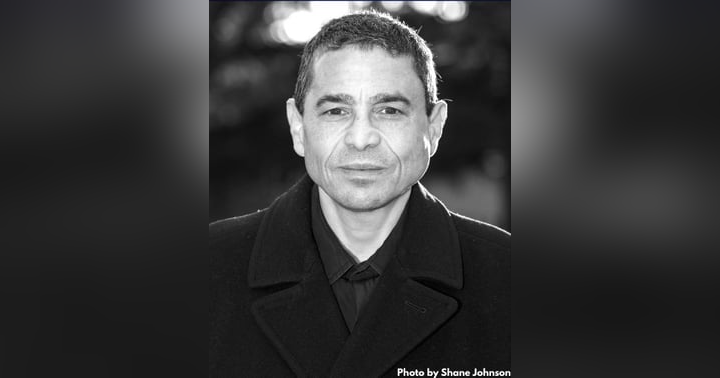
Francis DiClemente — Quintessential Poetry Spotlight